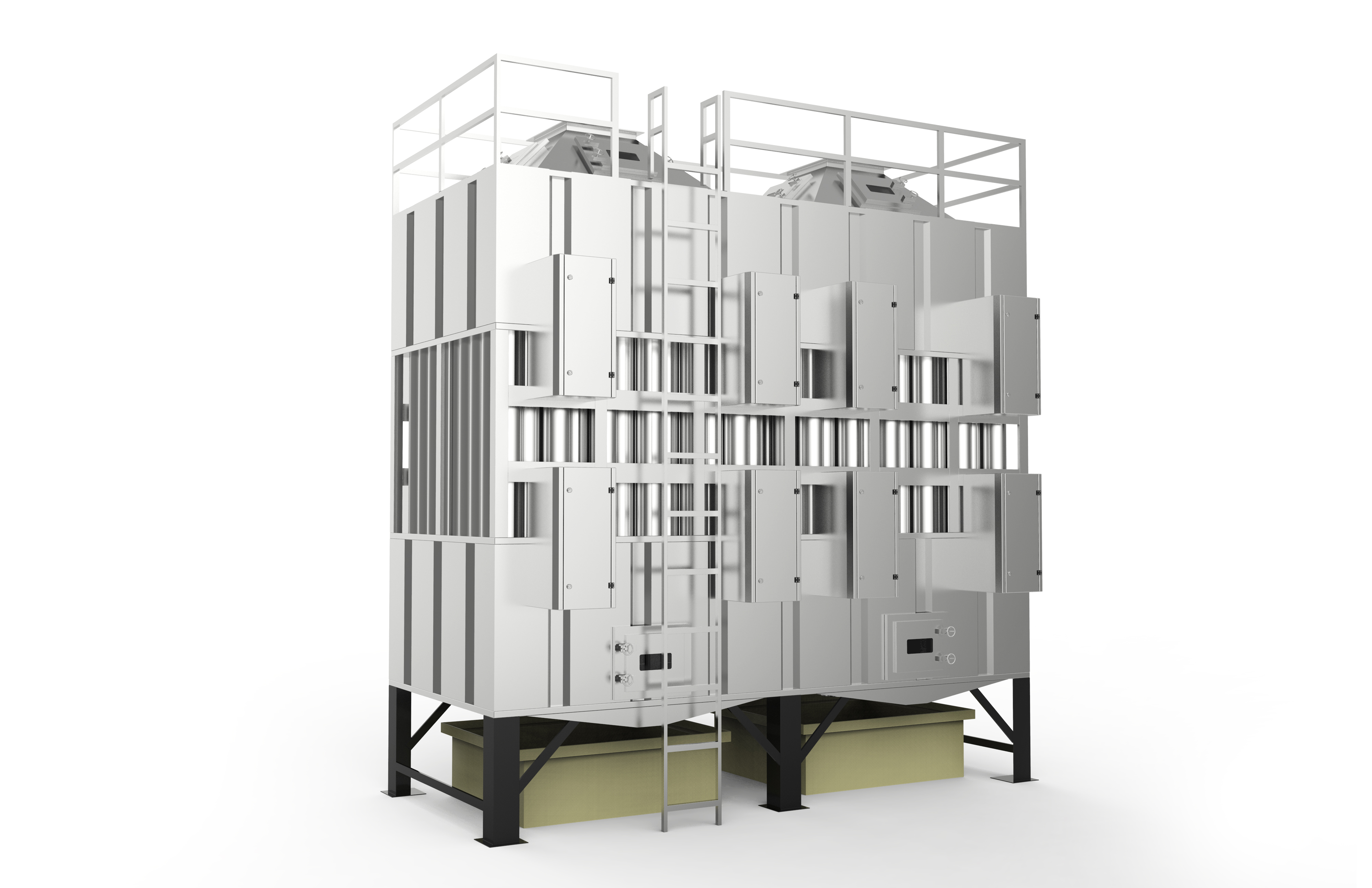
Wet Electrostatic Precipitator (WESP) Flue Gas Treatment Unit
High-tech patented WESP for sub-micron particulate, oil fumes, and complex industrial flue gas purification.
Designed around actual process conditions
Independently developed by FluxFine, this Wet Electrostatic Precipitator applies high-tech patented technology to eliminate fine aerosols, sticky fumes, and sub-micron dust from demanding industrial processes like PVC granulation, textile setting, and waste incineration.
Wet ESP Dust Removal Equipment
For sub-micron aerosols
Automated flushing
Safety interlocked
How it works
Flue gas passes through a high-voltage electrostatic field where fine droplets and particles are charged and collected on irrigated surfaces. Continuous or intermittent washing prevents sticky buildup.
- 01Pre-quenching and scrubbing
- 02High-voltage ionization
- 03Electrostatic collection on wet surfaces
- 04Automatic flushing of collected waste
- Dyeing, setting & printing
- Rubber, PVC & plastic granulation
- Waste plastic recycling
- Asphalt & waste incineration flue gas
- Gas must be cooled and quenched before entering the WESP.
- High-voltage components require safety interlocks and regular inspection.
Typical pollutants
- Oil mist
- Sub-micron dust
- Sticky aerosols
- Condensable organics
Engineering features
- Patented high-voltage technology
- Corrosion-resistant alloys
- Automatic flushing system
- Continuous high-efficiency operation
Available options
- Tubular or plate design
- 201, 304, or specialty alloys
- Multi-field configurations
Configure WESP Flue Gas Unit for your plant
Share measured process data so the engineering team can confirm suitability, pretreatment, equipment size and scope boundaries.
Source basis: Extracted from bilingual catalog for SEO. Published values are selection references, not a project guarantee.