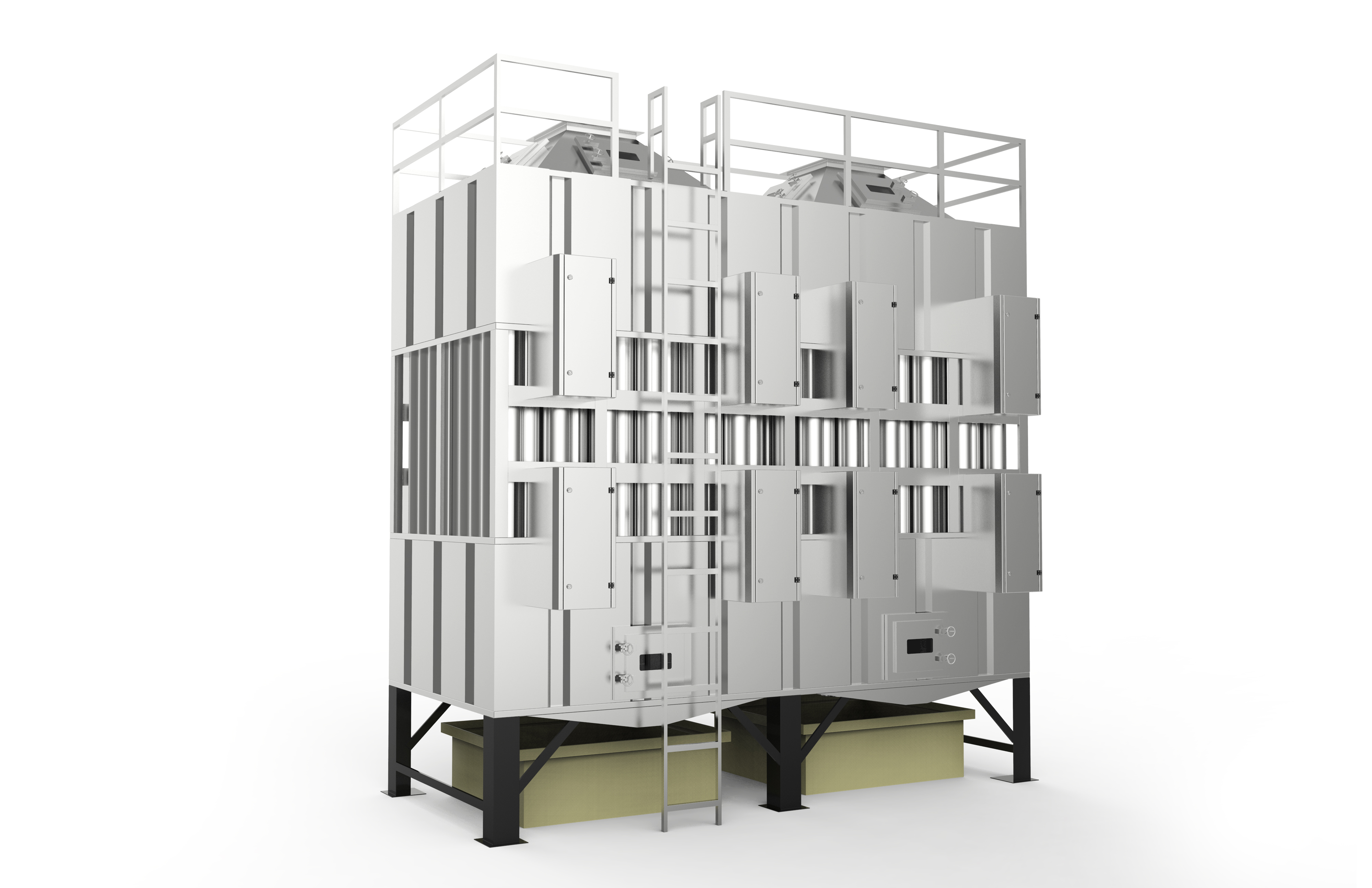
Wet Electrostatic Precipitator
High-voltage wet collection for fine, sticky and oil-bearing aerosols after suitable gas conditioning.
Designed around actual process conditions
WESP is used where conventional filters and scrubbers cannot reliably capture sub-micron or sticky aerosol. Irrigated collection surfaces reduce fouling and support continuous industrial operation.
Wet ESP Flue Gas Treatment Unit
Performance depends on particle distribution
Irrigated electrode system
Based on airflow and loading
How it works
Particles and droplets receive an electrical charge, migrate to collecting surfaces and are washed into the liquid-management system.
- 01Cool and condition the gas
- 02Remove coarse loading in pretreatment
- 03Charge and collect fine aerosol
- 04Wash collectors and manage liquid
- Industrial oil mist
- Sticky and fine aerosols
- Food and textile fumes
- Polishing after wet pretreatment
- Inlet temperature, humidity and combustible content require review.
- Wash-water handling and electrode cleaning must be included in the operating plan.
Typical pollutants
- Oil mist
- Fine particulate
- Sticky aerosol
- Condensable flue-gas components
Engineering features
- Fine aerosol capture
- Wet self-cleaning collection surfaces
- High-voltage controls and interlocks
- Corrosion-resistant material options
Available options
- Upstream spray tower
- Mist eliminator
- Wash-water recirculation
- Materials matched to gas chemistry
Relevant industries
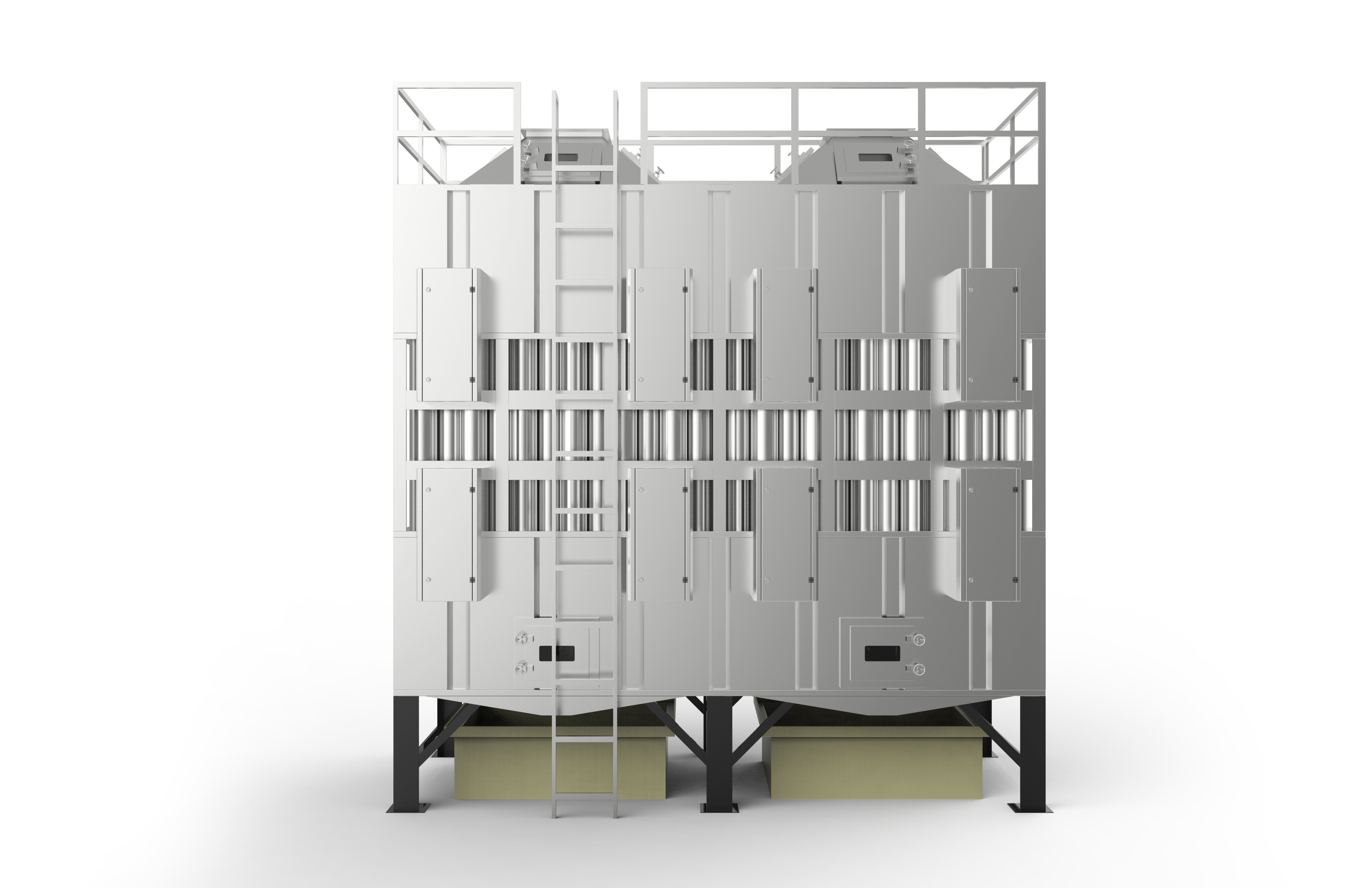
Equipment views
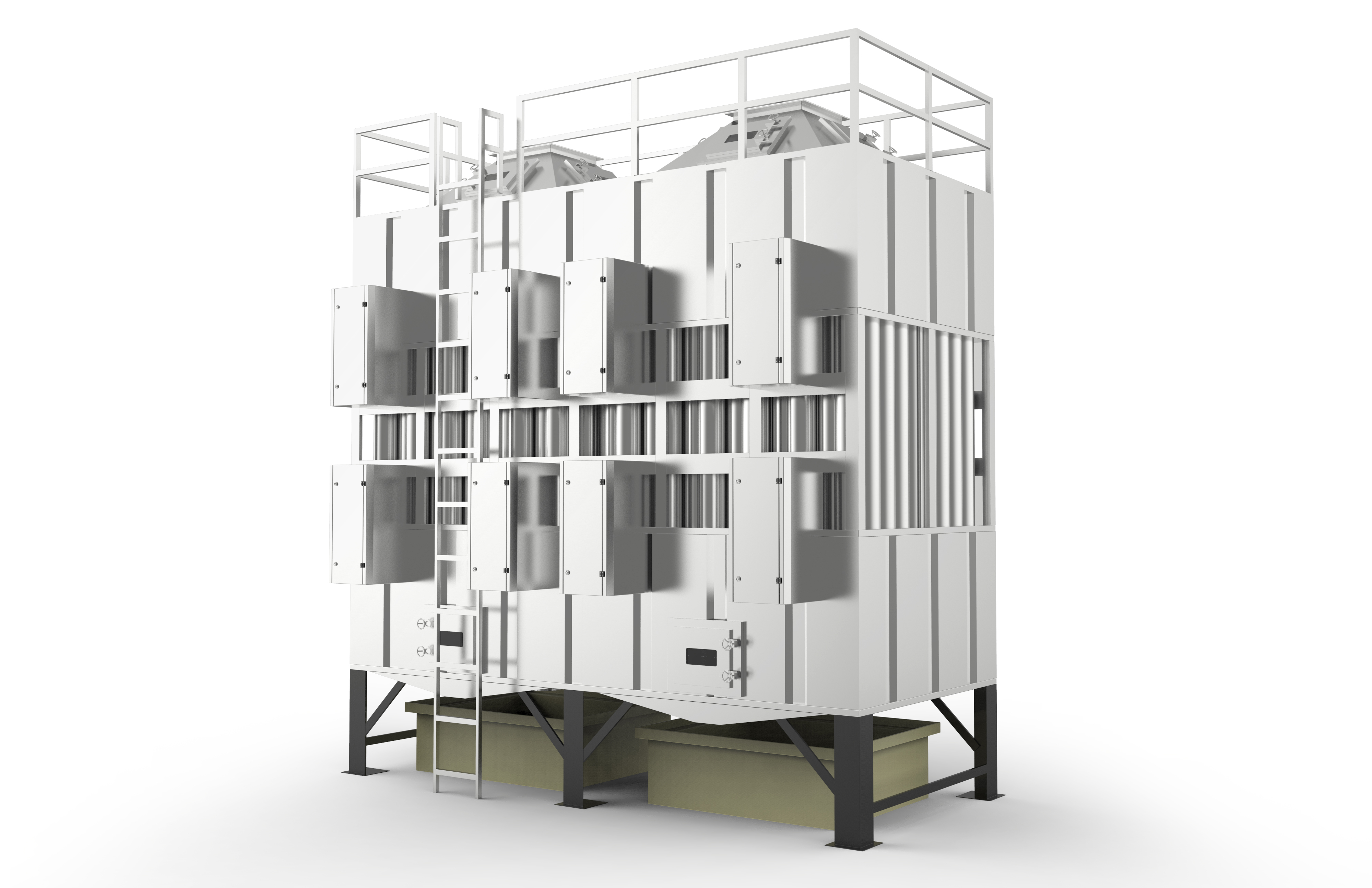
Product images show representative FluxFine configurations. Final dimensions, materials and interfaces follow the approved project design.
Configure WESP for your plant
Share measured process data so the engineering team can confirm suitability, pretreatment, equipment size and scope boundaries.
Source basis: 2026 product catalog and bilingual legacy product record. Published values are selection references, not a project guarantee.